 Quicksloth
Quicksloth Accessibility Toolbar for WordPress
Last updated: 13 October 2026
Give your visitors a toolbar that makes your pages easier to read on their own terms: bigger text, more spacing, stronger contrast, a dyslexia-friendly font, a reading guide, paused animations and a visible keyboard focus. No account to create, no requests to external servers, no cookies and no logo on your pages.
Coming soon to the WordPress.org Plugin Directory. This page will link to the plugin as soon as it is live there. Meanwhile, try the toolbar on our live demo page.
An accessibility toolbar helps some visitors; it does not make a website conform to WCAG or to the law. Fix your content and code first.
What your visitors get
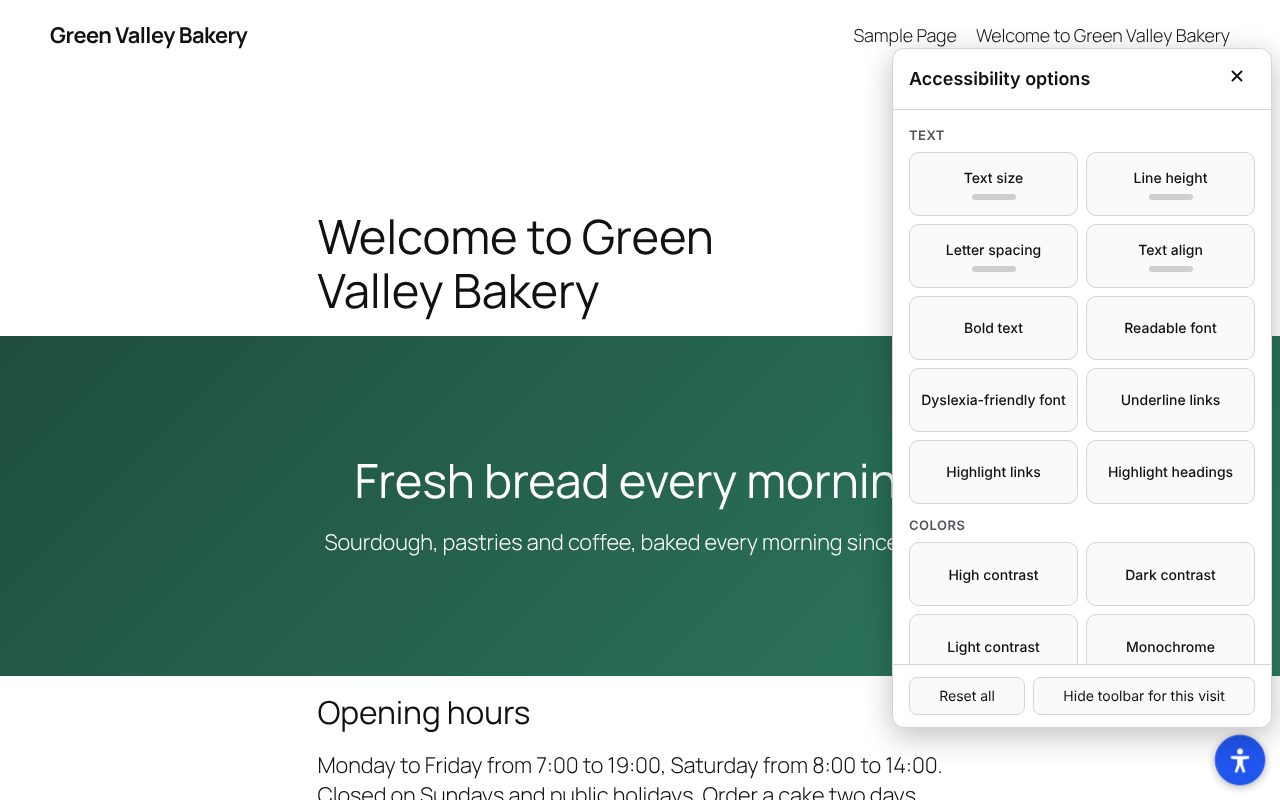
A button in a corner of the page opens a panel with 25 tools in four groups. Choices are remembered in the visitor's own browser across pages and visits.
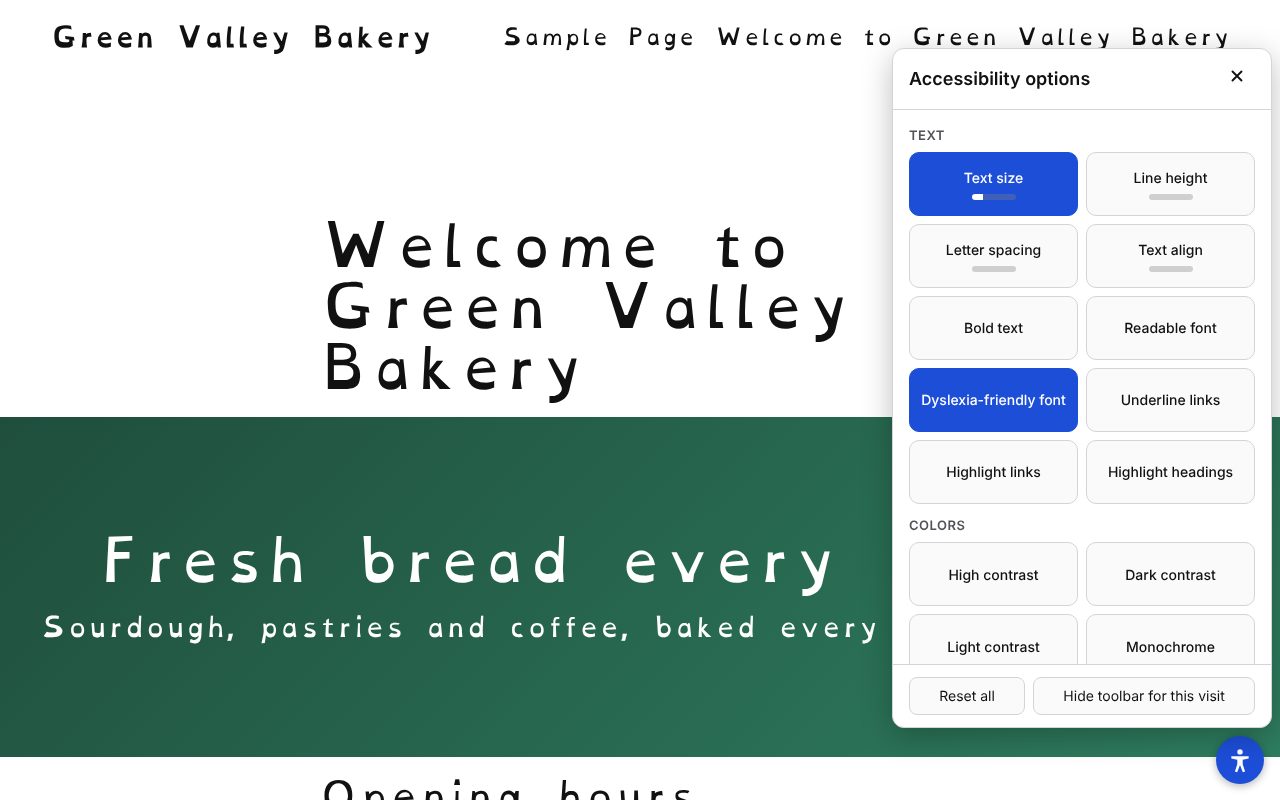
- Text: text size (up to 175%, including text added later), line height, letter spacing, text align, bold text, a readable system font, the OpenDyslexic font, underlined or highlighted links, highlighted headings.
- Colors: high, dark or light contrast, monochrome, low or high saturation, inverted colors (images and videos in the page keep their real colors).
- Reading: a reading guide and a reading mask that follow the mouse, a big cursor, hidden images, stopped animations, muted media, highlight on hover.
- Navigation: a thick visible focus outline for keyboard users, and a site map of up to 50 published pages inside the panel.
The panel also has Reset all and Hide toolbar for this visit. A "Skip to content" link for keyboard users is added at the top of every page, and you can turn it off.
What you can set
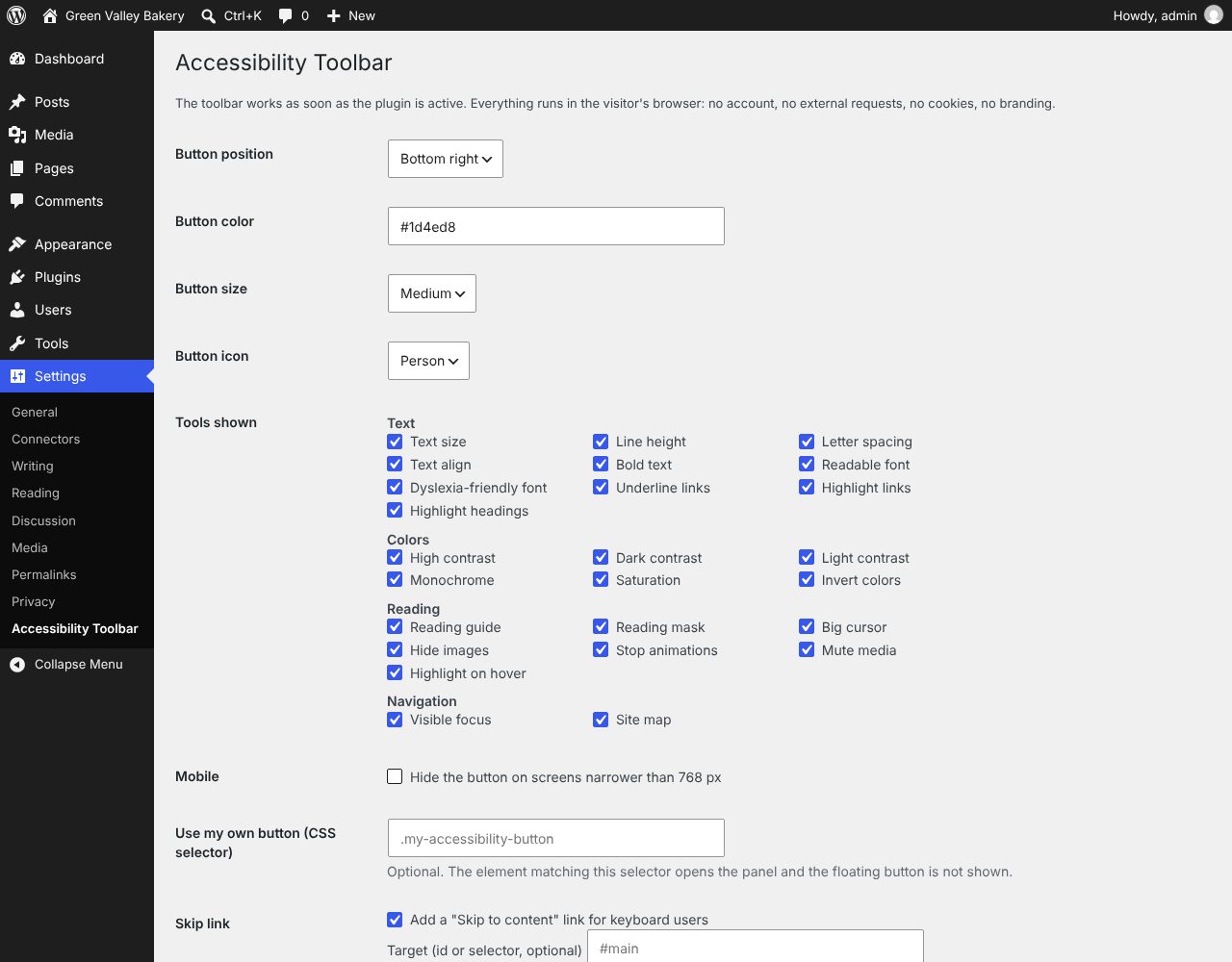
One page under Settings → Accessibility Toolbar. No top-level menu and no dashboard-wide notices: one dismissible review request appears on the plugin's own settings page after 14 days, and never again once dismissed.
- button position (any corner), color, size and icon;
- which tools are shown, and the pages where the toolbar does not load;
- hiding the button on small screens, or your own button or menu item instead of the floating one;
- the skip link and where it jumps to;
- the toolbar language: follow the language of each page, or a fixed locale;
- an optional "Accessibility toolbar by Quicksloth" line in the panel, off by default.
How it is built
- Light. One deferred script (about 9 KB gzipped) and the panel styles (about 2 KB). The page rules and the dyslexia-friendly font load only when a visitor turns on a tool that needs them. No jQuery.
- Isolated from your theme. The panel lives in a Shadow DOM, so theme and page builder CSS cannot change its layout. We test it on Twenty Twenty-Five, Astra and Kadence, with the block editor and with Elementor.
- Keyboard and screen readers. The panel is a dialog that keeps Tab inside while open and closes with Esc, returning focus to the button. Every button exposes its name and state, for example "Text size, Level 2 of 4".
- In the language of the page. Labels follow the language WordPress uses for each page where a translation is available (until then, the labels are in English), and the panel mirrors itself on right-to-left pages.
- Works with caching. The toolbar's HTML is the same for every visitor and choices are applied in the browser, so cached pages work.
Moving from One Click Accessibility (Ally)?
The plugin once called One Click Accessibility, then Ally, now needs an Elementor account and an outside service. Our side-by-side comparison and moving steps show what is the same, what is different and what our toolbar does not do.
What it does not do
It does not scan or rewrite your site's code, add missing alt text, or fix forms and headings. It changes how a page looks in one visitor's browser while that visitor has a tool turned on, and nothing else. The work that matters is in your content and theme: text alternatives for images, a logical heading order, enough color contrast, labels on form fields, and everything usable with a keyboard. More in Accessibility widgets and the EAA: what they do and don't do.
Price and license
Free. Every tool and every setting is included: nothing in the plugin is locked or time-limited. The plugin is released under the GNU General Public License, version 2 or later, like WordPress itself.
Install
Once the plugin is live in the WordPress.org Plugin Directory:
- In your dashboard go to Plugins → Add Plugin and search for "Quicksloth Accessibility Toolbar".
- Click Install Now, then Activate.
- Visit your site: the toolbar button is in the bottom-right corner.
- Optional: change the button, the tools shown and the pages where it loads under Settings → Accessibility Toolbar.
Your data
The plugin has no server of its own and sends nothing anywhere. A visitor's choices stay in that visitor's browser (localStorage), and the plugin sets no cookies. On your server it stores only its settings, its activation date and whether you dismissed the one review request; deleting the plugin removes all three. Details in the privacy policy.
Help
Email support@quicksloth.dev. The support page answers the common questions and explains what to include so we can help quickly.